Trades, electrical engineering and buildings
Standards, technology and the business that has to work with them
I write for trade media in electrical engineering, fire safety and building services, and for businesses that run their IT on the side. The articles explain a standard, a deadline or a route of attack so that a master craftsman can act …
More publications



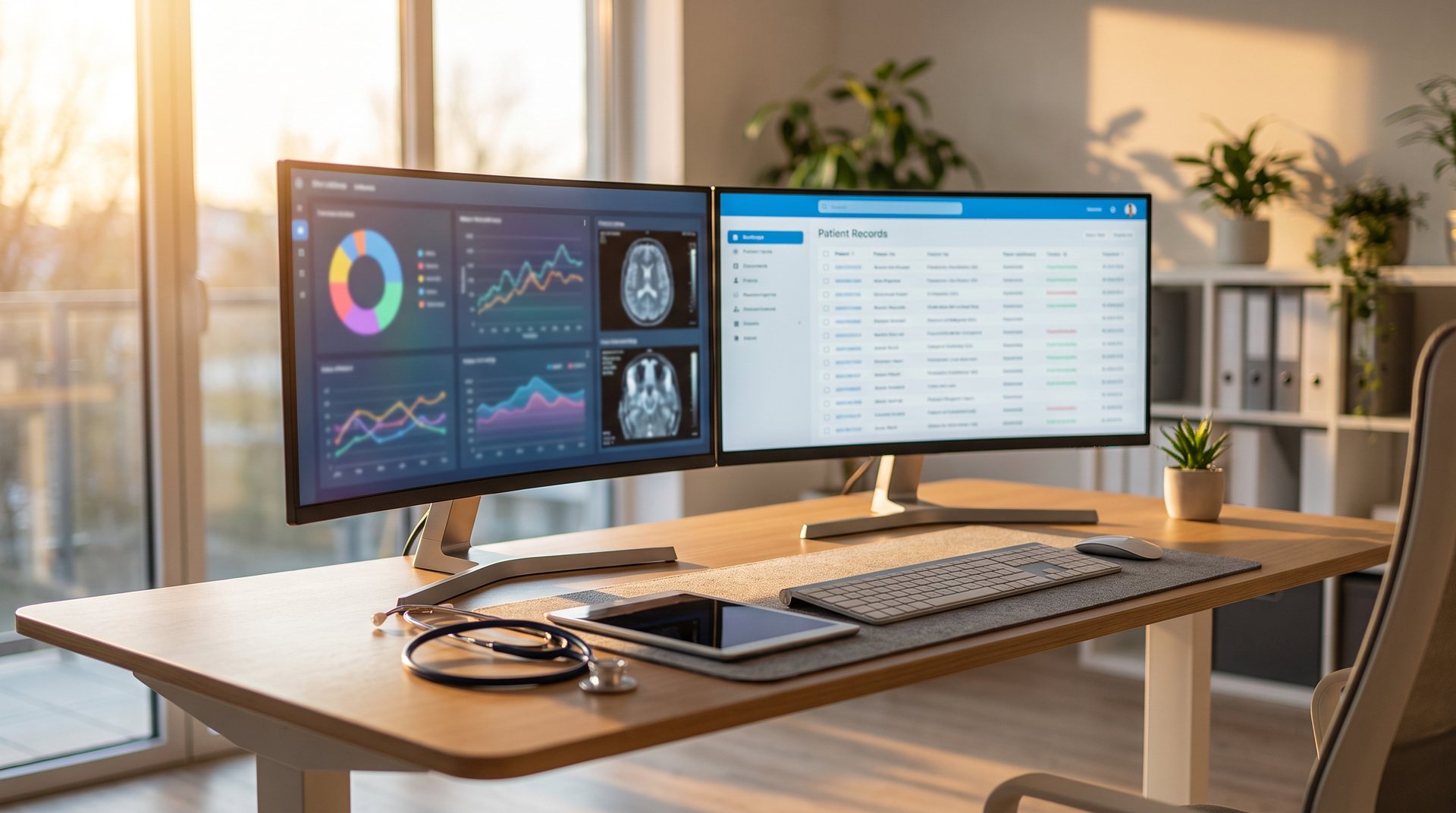
A view that brings workshop and IT together
A trade business runs its IT between the site and the office. The machine with the quotation calculations sits next to the store room, the tablet travels to the site. The system at the customer's premises is online for remote maintenance. An article about this only convinces if it knows both sides.
The professional grounding comes from thirty years of work for the IT trade press and from my own lab, where every description is reconstructed. Then there are the rules. DIN VDE, the requirements of section 14a of the German Energy Industry Act and the KRITIS umbrella act set out what a business has to document.
For editorial teams that means an article naming the rule, the deadline attached to it and the step by which a business meets it.
These are the publishers and editorial teams I write for










IntelligenceAugsburg
im HandwerkCV-Verlag
WirtschaftsverlagWien
für das BadewesenEssen
elektrofachkraft.de, the Low Voltage Directive handbook, Datenschutz-Praxis and Technische Dokumentation are published by WEKA Intelligence in Augsburg, the Swiss editions by WEKA Business Media in Zurich. FeuerTrutz belongs to Rudolf Müller Verlag, PLUS to Eugen G. Leuze Verlag, Computern im Handwerk to CV-Verlag. DSD is published by the German Federal Association of the Security Industry.
Current assignments from the trades and technology
Editorial teams from electrical trades, fire safety, building services and association work have commissioned these articles.
Standards for the qualified electrician
An ongoing series on the rules an electrical business works to. It covers DIN VDE 0100-701 for bathrooms and wet rooms, initial verification under DIN VDE 0100-600, VDE-AR-N 4105 for plug-in solar up to 800 VA and section 14a of the Energy Industry Act for controllable consumer devices.
What the law asks of a business
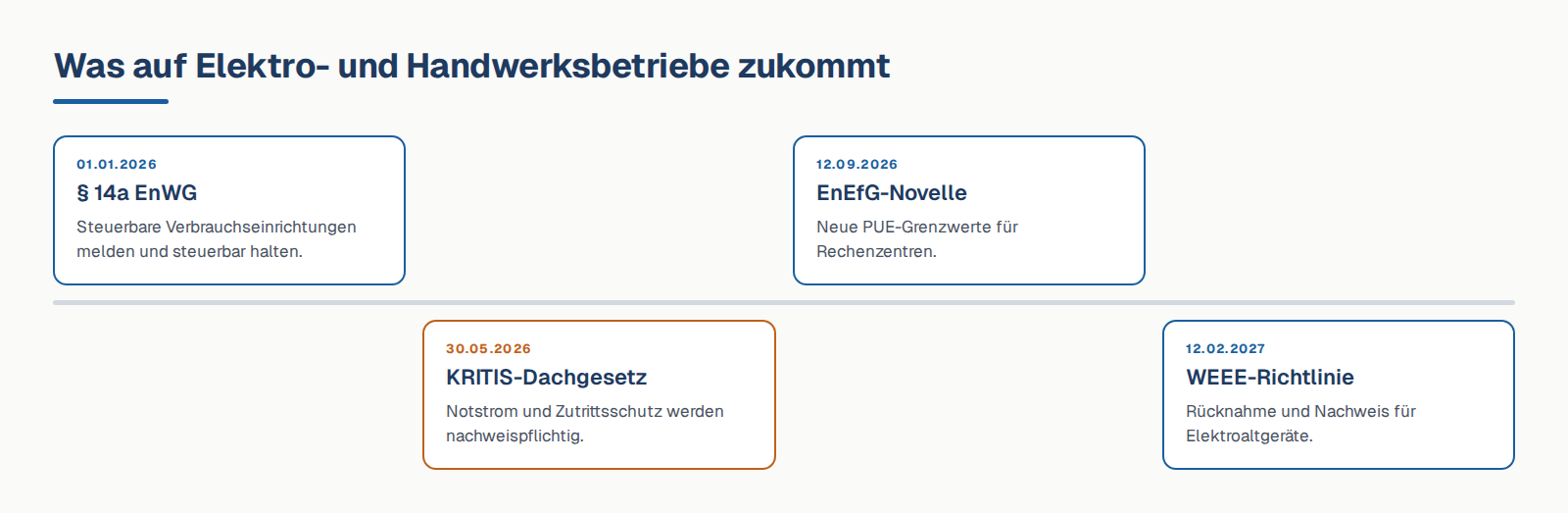
The KRITIS umbrella act and NIS2 make emergency power and access protection subject to proof. The amended Energy Efficiency Act sets new PUE limits for data centres. Both articles name the deadline and the step that comes before it.
The biggest ways in for cybercrime
For the November issue I describe the routes by which a trade business is actually attacked, and what an owner without an IT department can do about it.
Securing the site and the business
Two articles. One describes secure mobile work on site with managed devices. The other takes up cyber security in the trade business, covering backup, access and the emergency plan.
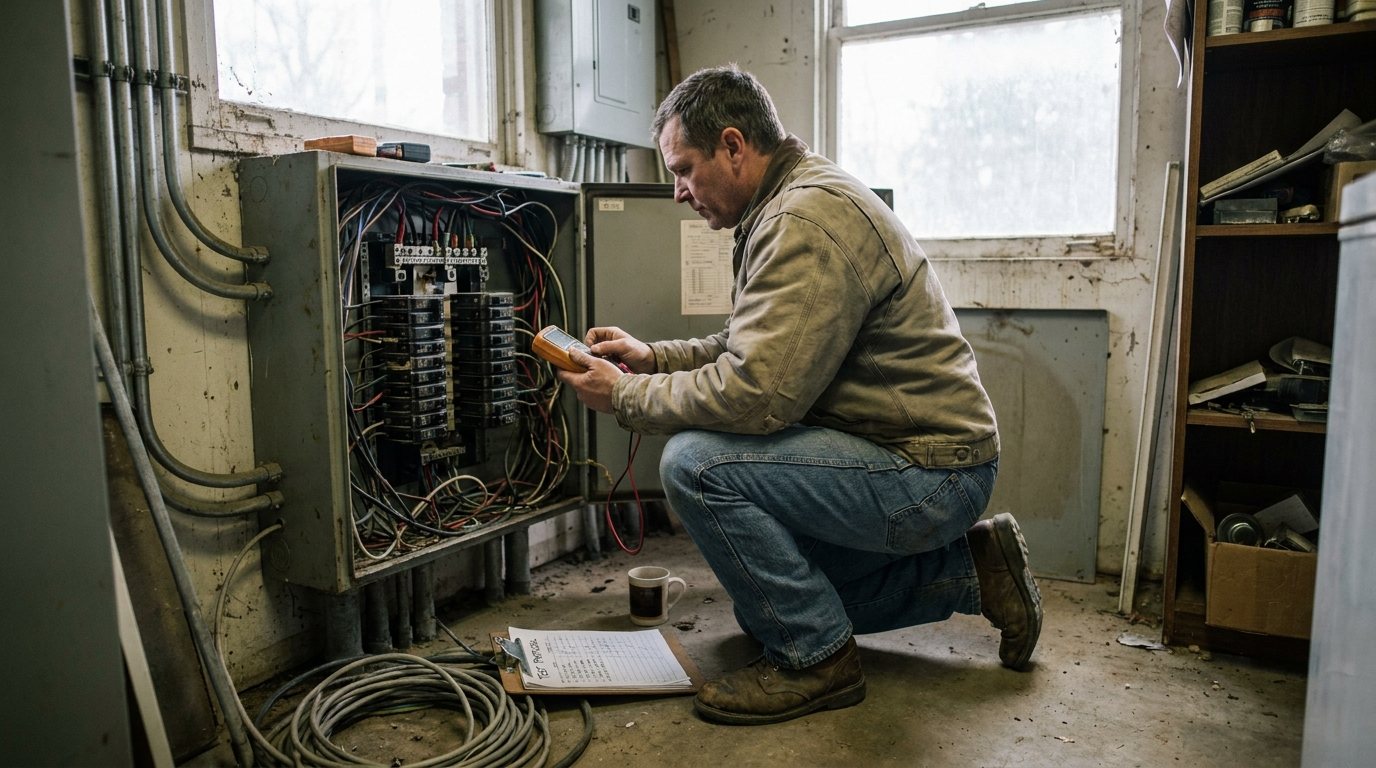
Every description comes from a reconstructed case, not from a data sheet.
Fire alarm systems as an attack surface
A networked fire alarm panel reports faster and is reachable from the network at the same time. The article takes the system apart and shows where an attacker starts.
Early detection and thermal stratification
Two articles for the magazine. The first names the limits of AI-assisted early fire detection, the second deals with thermal stratification in tall halls and what it means for detector placement.
Processing on behalf with AI services
Anyone using an AI service is processing data on behalf of someone else. The article shows which points belong in the contract and how a business checks compliance.
Access and emergency calls in building services
Managing access systems digitally and protecting them from attack. Plus the shutdown of the 2G network and what it means for lift emergency calls that still run over it.
Section 14a via the smart meter gateway
The article follows the path from the meter cabinet through the gateway and the CLS channel to the controllable device, and names what the business sees and what the grid operator controls.

What works in the office has to be usable in the rain and with gloves on.
CE, RoHS and the Battery Regulation
For the handbook on the Low Voltage Directive I write about how the regulations relate to one another, plus the WEEE Directive for electrical waste.
Electrical safety and AI
The webinar combines fault logs from the installation with an AI-assisted analysis: which patterns a machine can find, and which check comes first.
Protecting access systems from attack
For the association magazine I describe how a digitally managed access system is secured and what traces it leaves when something goes wrong.
Electronics manufacturing and test technology
Ongoing articles on circuit board and assembly manufacturing, from X-ray inspection of server boards to silicon and silicon carbide from European residues.
AI in design and variant assessment
For the architecture and construction forum I describe what AI tools achieve in design and in assessing variants, and where responsibility stays.
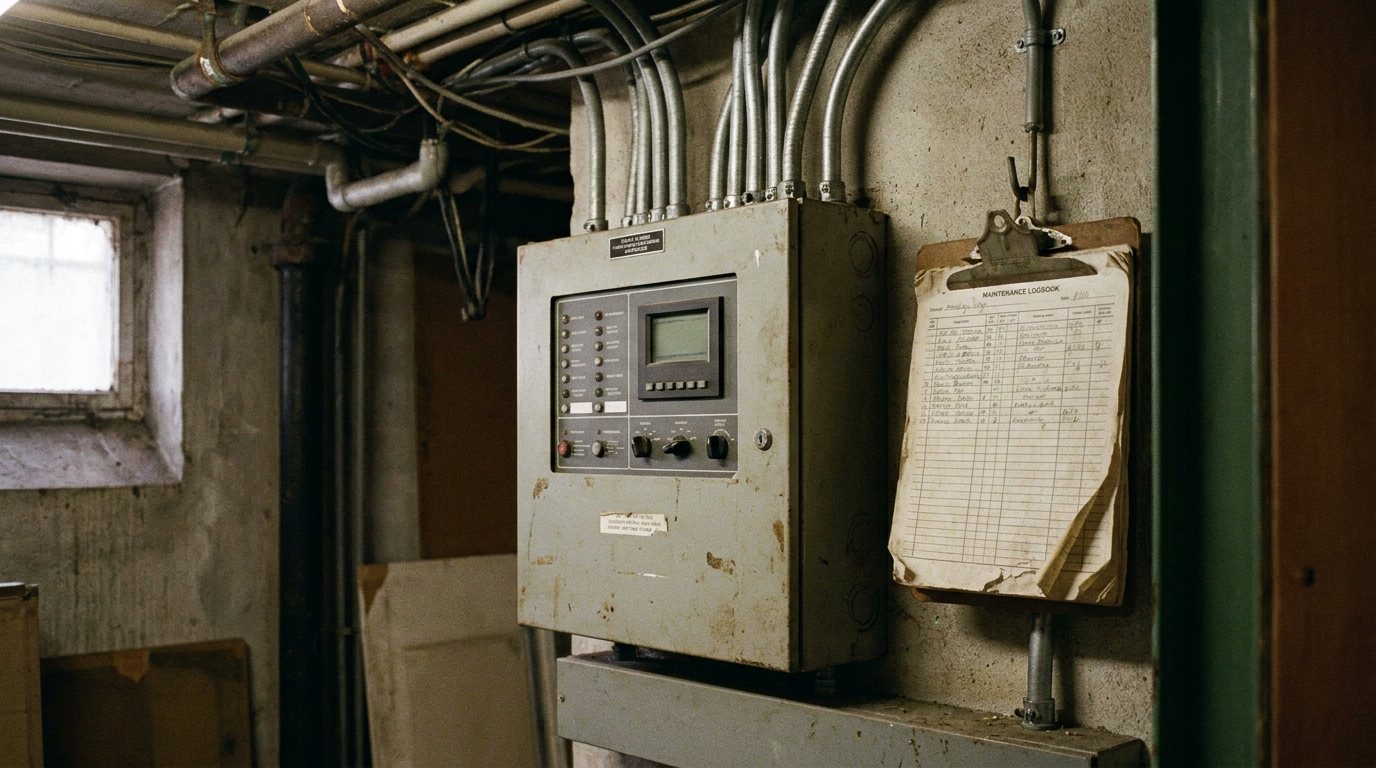
Fire alarm and access technology is on the network and needs the same care as a server.
Digital administration of residential property
The article shows how an administrator keeps records, resolutions and statements digitally without breaching documentation duties.
Digital twins in water supply
The article sets out what a digital twin achieves in a supply network and which data an operator really needs for it.
Four updates a year
Publishing systems compared, illustration software, macros in documentation, new media in DIN EN IEC 82079-1 and the move to post-quantum cryptography.
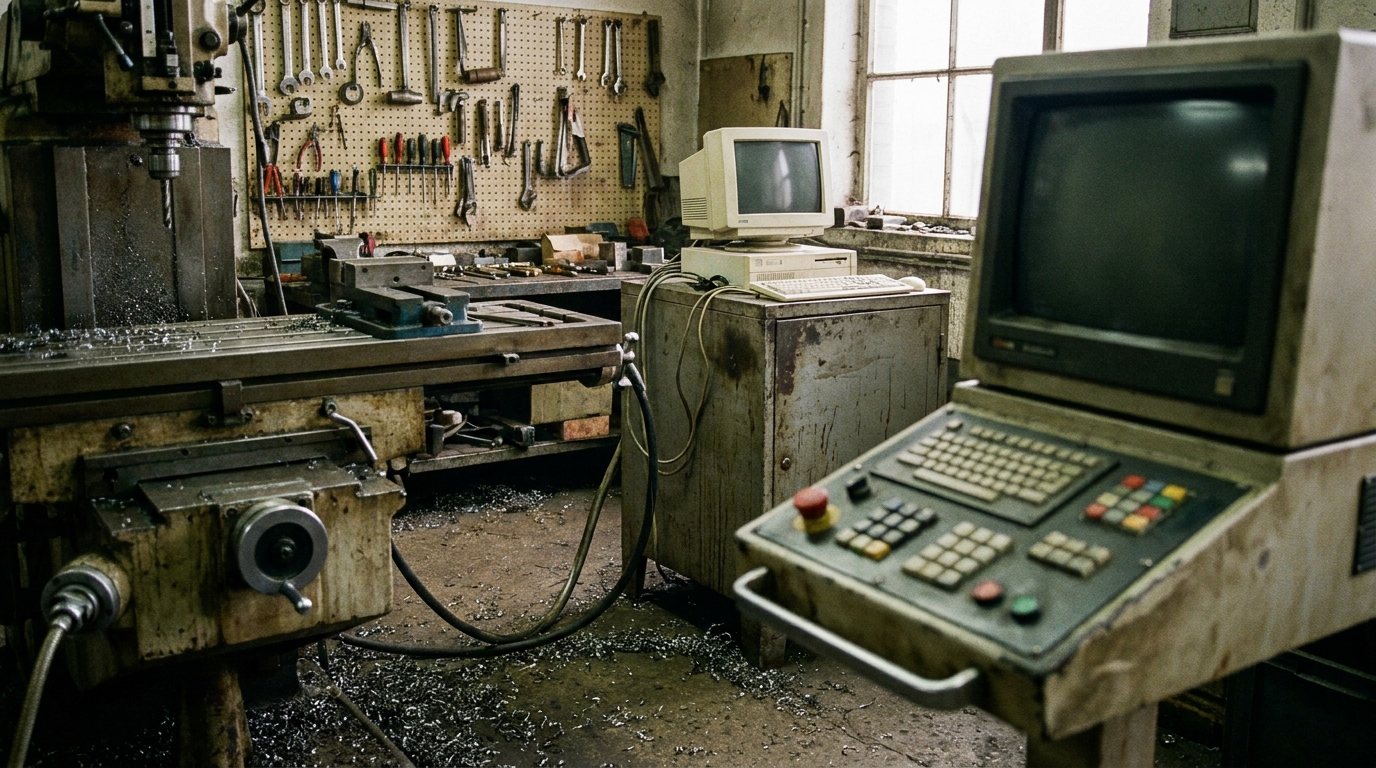
Old control computers can rarely be replaced. Separating and monitoring them is the way.
The articles connect current standards with what a business actually has to implement. Testing happens in my own lab, not on a data sheet.
Where a trade business is actually attacked
Attacks rarely hit the technology the trade press writes about. They hit the office, the tablet and the remote maintenance link at the customer's site.

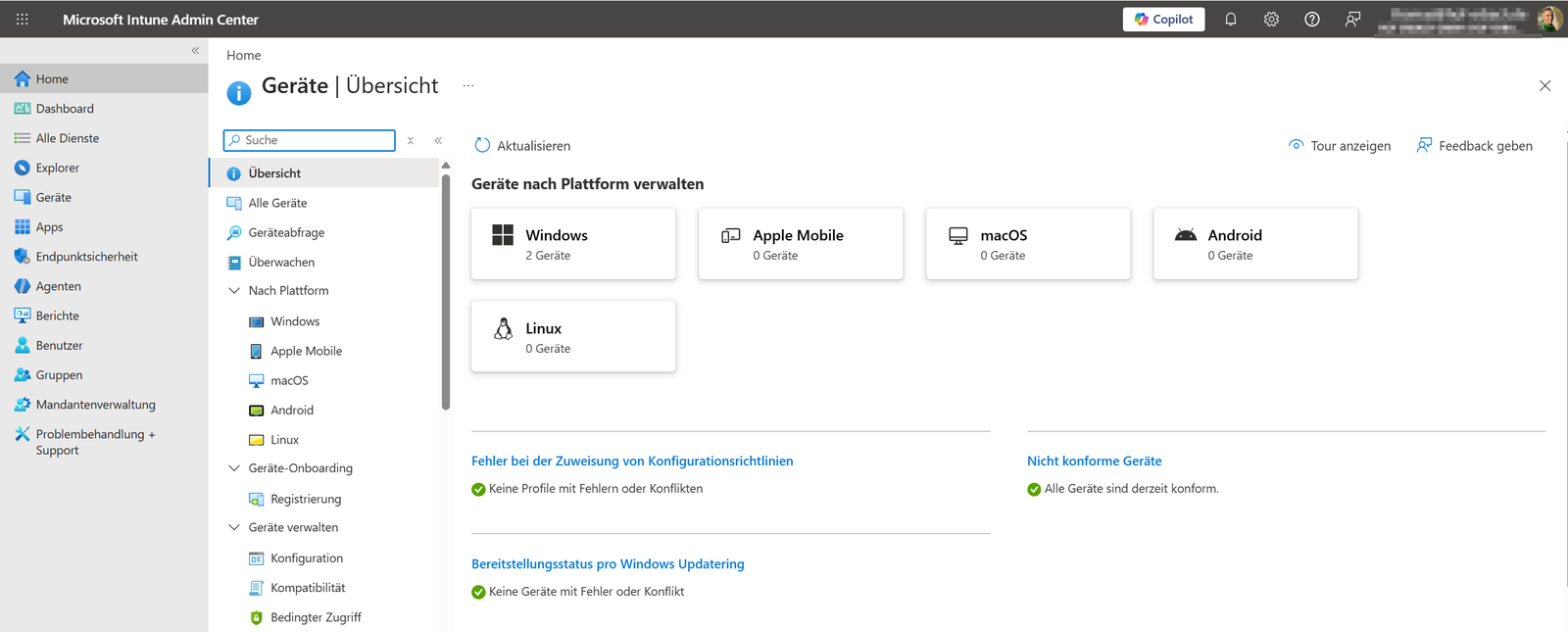
The tablet on site belongs under management
A lost device is the normal case in the trades, not the exception. What matters is whether it was encrypted, whether it can be wiped remotely and whether the credentials on it are tied to an account.
The article for Computern im Handwerk shows this on a configured management setup, not on a product description.
From the meter cabinet to the controllable device
Since section 14a of the Energy Industry Act a business has to know which path the readings take and where the grid operator may intervene. Both run through the same unit, but separately.
The business sees the readings, the grid operator controls only through the CLS channel. Both run through the same unit, but on separate paths.
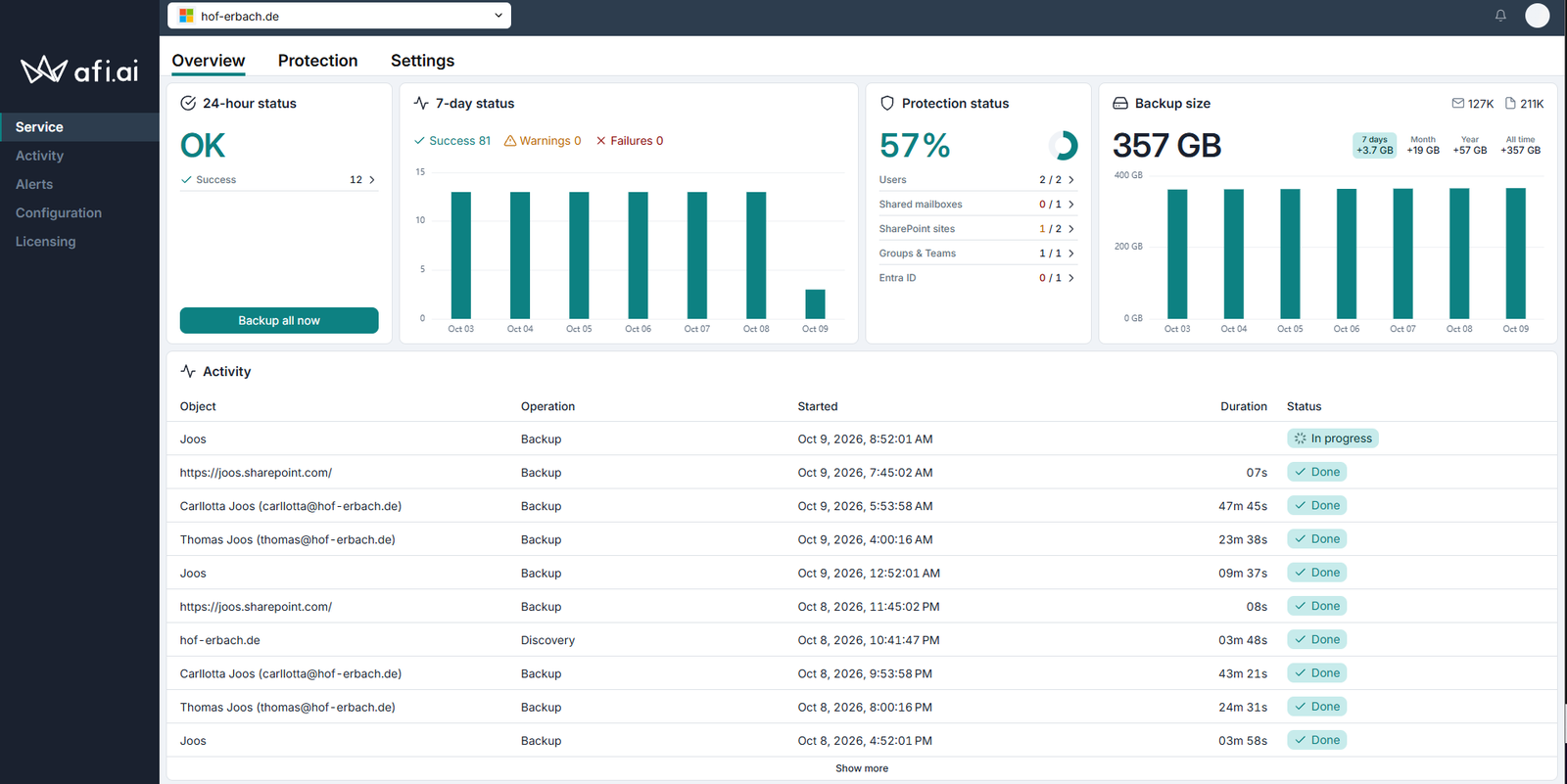
The backup decides how long the business stands still
Between one day of standstill and three weeks there is often just one question. Is there a backup the attacker could not reach, and has anyone ever practised restoring from it?
The articles show both in a configured environment, the state of the backups and the way back.
Topics I am engaged with
A selection from the work on the current articles. They affect many businesses and I follow them professionally.
Section 14a reaches every new connection
Heat pumps, wallboxes and storage units have to be controllable. What counts for the business is who registers the device, how the control channel is commissioned and what remains documented when something fails.
The KRITIS umbrella act pushes duties downwards
Operators have to document emergency power and access protection. That also affects the firms that build and maintain such systems, because they supply the evidence.
Fire alarm technology is on the network
A networked panel reports faster and is reachable at the same time. A planner separates the alarm line from office operations and logs every access.
Remote maintenance is the most common open door
Heating, ventilation and door systems are serviced remotely. An account still on the factory password remains the fastest way into a customer's installation.
AI enters the business through analysis
Fault logs, measurement series and test reports can be analysed by machine. The benefit shows where nobody had time to read before.
The WEEE Directive brings documentation with it
Take-back and disposal of electrical waste are documented. For businesses with their own store room that is a question of procedures, not of technology.
Working with trade editorial teams
For trade media in the crafts, electrical engineering and building services I write articles that explain a rule and show the way to it. Topic proposals come regularly and I keep to deadlines.
Write to me