AI in Medicine
Understanding examination results, for patient and physician
AI summarizes findings from several sources, puts laboratory values into context and explains results in plain language. Patient and physician save time, while the medical assessment remains the foundation.
More publications




Making findings understandable, protecting data
Medical results come in scattered form. The laboratory report comes from the lab, the ultrasound from radiology, the medical letter from the clinic. A locally operated AI brings these sources together into an ordered overview and shows the connections over time.
Laboratory values consist of numbers without explanation. The AI assigns each value to the appropriate reference range and describes in plain language what a result means. The patient understands the finding, the physician gains time for the actual assessment.
Protecting the data comes first. Specially trained language models run locally in the practice or clinic, and the findings never leave the premises. The AI supports, but the diagnosis and the therapy remain the physician's responsibility.
What AI delivers in concrete terms
Features that make working with examination results easier for patients and physicians.
Bringing findings together into one overview
The AI reads laboratory reports, imaging and medical letters from different institutions and orders them by date. Patient and physician see the course of events at a glance instead of in a stack of paper.
Putting laboratory values into proper context
Each value receives the appropriate normal range and an indication of whether it lies above or below it. The patient immediately sees which values need attention, and the physician is spared the manual comparison.
Explaining results in terms laypeople understand
The AI translates technical terms from the finding into ordinary words and states the meaning behind them. The patient understands the finding before the consultation, and the consultation itself becomes shorter and calmer.
Creating a handout on the finding
The handout describes what was examined and what the results indicate. The patient takes home an understandable summary, and the physician can provide it without any writing effort of their own.
Researching relevant guidelines and studies
The AI searches medical guidelines and current studies for the specific case and cites the source for each. The physician receives the state of research with a reference, and the patient a sound basis for questions.
Suggesting sensible follow-up examinations
From the available values, the AI derives which further examinations would help to clarify matters. The suggestion serves the physician as a checklist, but the decision about the next examination is theirs to make.
Preparing for the consultation and guiding to the specialist
The AI compiles a list of questions and assigns the finding to the responsible specialty. The patient goes into the consultation prepared and reaches the right specialist without detours.
Cross-checking several AI perspectives
Different models assess the same finding and flag contradictions, errors and false alarms. The physician receives verified pointers instead of a single opinion, and risky misinterpretations surface early.

The patient understands the finding
A finding full of technical terms creates uncertainty. The AI translates the results into plain language and puts into context what a value means. The patient comes into the consultation prepared, the physician explains less from scratch and gains time for the assessment.
AI handles the documentation of the consultation
During the consultation an AI system listens along and writes the documentation in the background. The physician talks with the patient instead of typing. In the end there is a structured summary that the physician reviews and approves. This leaves more time for the patient.


AI analyzes patient data and detects patterns
From the values of several examinations, the AI detects patterns and trends over time. A value that rises slowly, or a connection between two findings, becomes visible. The physician receives a structured overview that supports their own assessment. The decision is made by the physician.
An understandable summary to take home
The AI creates a handout that describes what was examined and what the results mean. The patient takes home a clear overview and can read through it at leisure. Questions for the next consultation arise from it on their own.

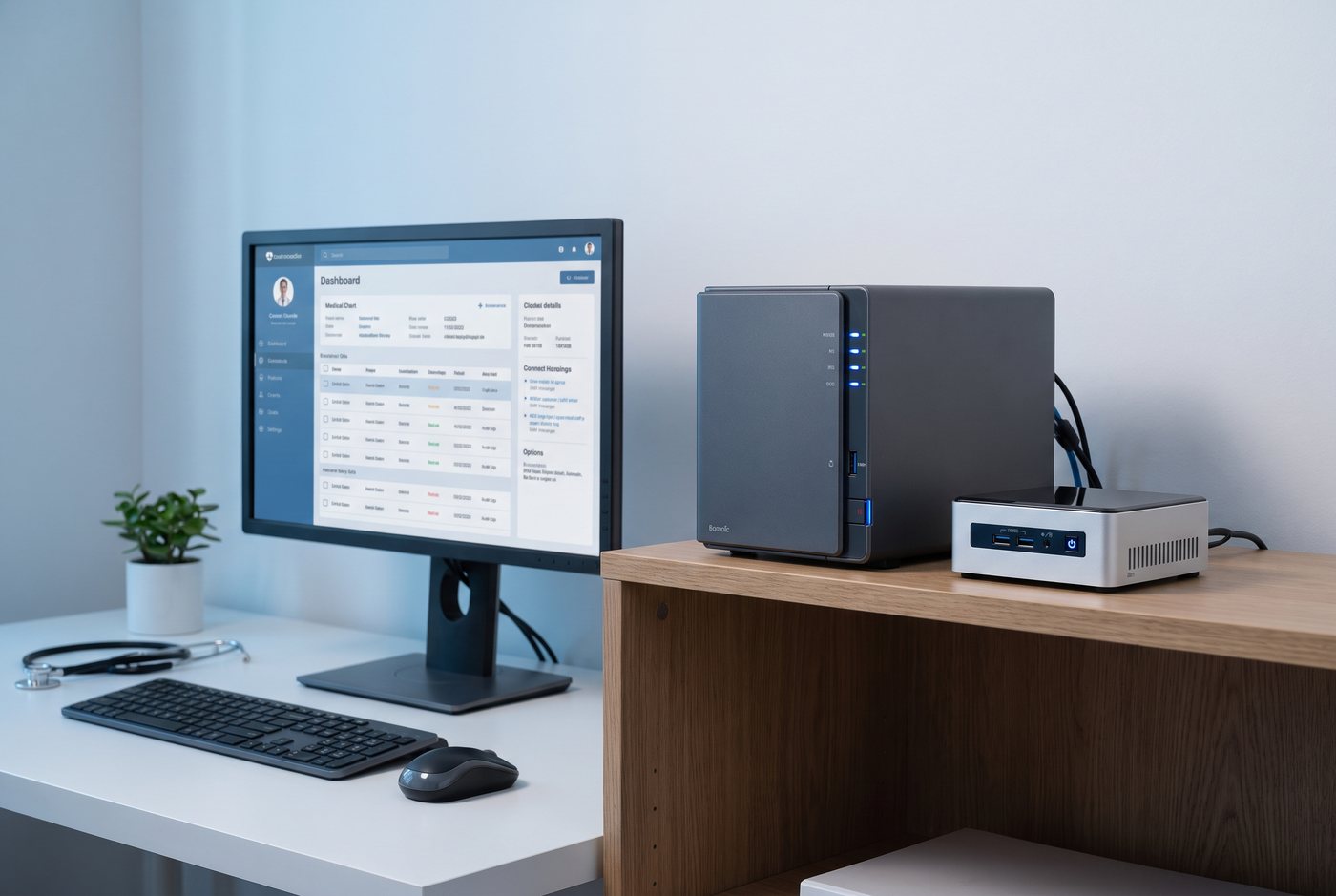
GDPR-compliant through local language models
Locally hosted language models process the findings directly in the practice or clinic, the data never leaves the in-house IT and is not sent to any cloud provider.
Models trained specifically on medical texts deliver the accuracy that a general model from the cloud cannot guarantee. Operating on the premises keeps the processing GDPR-compliant and control over the patient data with the physician.
What I am working on
Current developments around AI in medicine, with an eye on data protection and practical benefit.
Clinics build their own language models for the medical letter
The University Medical Center Hamburg-Eppendorf operates its own models, Argo and Orpheus, which access the patient record and generate the discharge summary. The speech recognition system Orpheus has been running since early 2025 at four university hospitals and over 30 hospitals, with a data basis of seven million anonymized cases. A model operated in-house makes the cloud dispensable.
Open-source models reach the level of commercial systems locally
A team from the University of Magdeburg and the Charite examined DeepSeek-V3 and R1 on 125 standardized patient cases. The freely available models delivered equivalent, in some cases better results than market-leading commercial systems and run in the isolated clinic IT. For data protection this means a local option without loss of quality.
AI makes radiology findings readable for patients
A study by the Technical University of Munich simplified 200 oncological CT findings with the open-source model Llama 3.3 70B. Reading time dropped from seven to two minutes and comprehension rose considerably, while at the same time six percent of the texts contained a factual error. This is the reason for medical review of every AI output.
Ambient Documentation arrives in German clinics
Since October 2025, AI systems in pilot projects at the Charite Berlin, the University Medical Center Mannheim and other institutions have been listening to the physician-patient consultation and generating the documentation from it. The approach relieves the physician of writing work and gives time back for the patient.
Retrieval systems bring guideline knowledge to the point of care
Fraunhofer IPA is developing a RAG chatbot that links S3 guidelines, specialist literature and internal clinic procedures with the data of the individual patient and delivers answers with source citations. Retrieval Augmented Generation couples the language model to verified sources and lowers the risk of fabricated statements.
The EU AI Act regulates AI medical devices through fixed deadlines
AI in medical devices falls under the high-risk requirements of the EU AI Act, including risk management, data governance and human oversight. The Digital Omnibus postponed the deadline for product-embedded AI to 02.08.2028, while the obligations themselves remain in place. For practices and manufacturers this means predictable requirements for every medical AI in use.
Medical informatics and thirty years of IT
I studied Medical Informatics and have worked for over thirty years as an IT and AI specialist author. Privately, I create AI-supported summaries of medical findings to make results understandable and to guide people to the right specialist.
The AI supports the preparation and the understanding, while the diagnosis and the therapy remain the physician's responsibility. From this combination of IT knowledge and a medical background, I write in a vendor-independent way and close to practice.
Collaboration in the field of AI and medicine
For specialist articles, series or talks around AI in medicine, understandable findings and the data-protection-compliant operation of local language models, I am glad to be available to editorial teams, practices and clinics. A short message with the topic is enough.
Write a message